


|
|
|
|
||
|
Chapter 1 The Great Detective
From the first shocking news report on Fuhrmans gold mine of a murder investigation, something about it seemed awfully familiar. It was like a movie or a remake of a movie that we must have seen more than once but could name only in the general sense of a deadly love triangle and a long trail of clues leading to the killer. Perhaps it was a combination of screenplays with all their striking, coincidental similarities to a real-life murder mystery...if, indeed, the killer's identity was ever a mystery to most people. It was still a compelling crime drama with a slew of associations to other
Hollywood/true-life crime dramas. Bundy, the name of the street where it happened was a
built-in reminder of serial killer Ted
If you looked at O.J.'s wealth and popularity coupled with the color of his skin, the color of the victims and the rich, white community in which he lived, how could you not be reminded of Lawrence Olivier or Orson Wells in blackface as Othello? And how could you not be reminded of Paul Robeson, that other popular black football-hero-turned-actor who played the role of Othello: The Moore of Venice on stage? On Monday, June 13, 1994 everyone was talking about O.J. and the two victims <![if !vml]> <![endif]>of a crazed slasher in Brentwood California; one victim, O.J.'s ex-wife, Nicole,
the other a young, unidentified man. Most of us knew what color the woman was by the
media's reminder of a New Year's Day incident in 1989 where O.J. was reported to have
beaten a white female who turned out to be his wife. 1989 was also the year that handsome, charming Ted Bundy got a lethal dose of "the juice"
in Floridas electric
<![if !vml]> <![endif]>of a crazed slasher in Brentwood California; one victim, O.J.'s ex-wife, Nicole,
the other a young, unidentified man. Most of us knew what color the woman was by the
media's reminder of a New Year's Day incident in 1989 where O.J. was reported to have
beaten a white female who turned out to be his wife. 1989 was also the year that handsome, charming Ted Bundy got a lethal dose of "the juice"
in Floridas electric
<![if !vml]> <![endif]>chair for beating two women to death with a stick nearly the
size of a baseball bat and mutilating their bodies. What a fascinating coincidence that
the handsome, charming celebrity known as the Juice may have killed and mutilated a woman
on a street called Bundy with his record for beating her so firmly established on the
first day of 1989. In The Deliberate Stranger, the orange juice police
detectives responsible for bringing Ted Bundy to justice were drinking as they awaited his
electrocution rendered the connection to O.J. more pointedly. <![endif]>chair for beating two women to death with a stick nearly the
size of a baseball bat and mutilating their bodies. What a fascinating coincidence that
the handsome, charming celebrity known as the Juice may have killed and mutilated a woman
on a street called Bundy with his record for beating her so firmly established on the
first day of 1989. In The Deliberate Stranger, the orange juice police
detectives responsible for bringing Ted Bundy to justice were drinking as they awaited his
electrocution rendered the connection to O.J. more pointedly.
On Tuesday, the 14th we heard that Ronald Goldman was the male victim. We heard that he was a friend of Nicole, a waiter who had gone to Nicole's condominium to return a pair of prescription glasses that her mother Juditha Brown had left in a restaurant earlier that evening. From those glasses and the # 10 envelope Goldman carried them in, police determined that he just happened to be in the wrong place at the wrong time. We heard that Goldman was 25. We heard that Simpson was 47. We already knew O.J.'s color. But, for some reason, it kept coming up. In the absence of a truly amazing revelation that proved O.J. didn't do it, the only things we could reasonably look forward to by the end of the week were the details of how and why he did it. Screenwriters and directors of yesteryear had already done the critical thinking for us in answering the big questions. Where something significant from one film didn't fit the facts of the Bundy slayings, something from another one did. It was downright weird. Even the most grotesque racial stereotypes in D. W. Griffith's 1915 classic, Birth of a Nation, appeared to have a counterpart in the mind, body and soul of O.J. Simpson as we were seeing him for the first time. The new O.J. image made it unnecessary to know a thing about the African- <![if !vml]> <![endif]>American villains, Gus "the renegade negro" (Griffiths
small "n") and Silas the mulatto in Griffiths Birth
of a Nation. These were men with more influence in the Reconstruction South than
they could handle who were driven to madness and murder by their lust for white women --
white women who had the good sense to reject
them. The more you heard about O.J. and his
alter ego the more you knew about Gus and Silas. <![endif]>American villains, Gus "the renegade negro" (Griffiths
small "n") and Silas the mulatto in Griffiths Birth
of a Nation. These were men with more influence in the Reconstruction South than
they could handle who were driven to madness and murder by their lust for white women --
white women who had the good sense to reject
them. The more you heard about O.J. and his
alter ego the more you knew about Gus and Silas.
<![if !vml]> How do you get around the Othello parallels with a rich, all-conquering, older black man named Orenthal accused of killing his young, white ex in a jealous rage? What about O.J.'s resemblance to that famous black Shakespearean character and the black man best known for portraying him on stage? What about the fact that Othello might have been a first or a last name and the two white actors best known for playing the part on film were Orson Wells and Lawrence Olivier? What do you do with all of those automatic links between the real world and Hollywood? How can you even know all of the associations youre making on a subconscious level with the ubiquitous O.J. name? And wasn't there something about the name Juditha Brown that had a show biz connection to murder...or was that Judy Brown? No, it was Lucy Brown from Bobby Darin's hit song "Mack the Knife." Then again, didn't Jeff Goldblum do a thing on TV with brown in the title? Yes, Tenspeed and Brown Shoe. Goldblum/Goldman. Goldblum was Brown Shoe. A "ten" (as in number 10 envelope found near the Bundy glove), a "brown" (as in Nicole's maiden name) and a shoe (as in Bruno Magli Lorenzos). Goldblum portrayed Ernie Kovacs in a movie which played the original "Mack the Knife" melody from Brecht and Weills Three Penny Opera in the background. The police found two pennies and two dimes lying on the Bundy crime scene close to where Nicole's throat was slashed to the vertebrae. The made-for-television Jack the Ripper movie with Michael Caine had loose change on the ground where Marry Nichols' throat was slashed to the vertebrae. Nichols/Nicoles/Nicole S. Only through the words, history and physical description of Mark Fuhrman do all of these word and picture associations come together in a coherent statement of culpability. That statement includes the words and deeds he attributed to his partner Brad Roberts, to Nicole and to O.J. Where there were gaps in the logic of the evidence as it was discovered or interpreted by others they were invariably filled in by Mark Fuhrman. Thats what identifies him as the murderer. Only the murderer could have done it all with a little help from Brad Roberts, Denise Brown, Faye Resnick and Ron Shipp, all of whom are connected by Shipp and Denise. We can all, in fact, single out anyone on the planet using a relatively small number of empirically associated attributes and the attributes that person attaches to others. For example: My career in automotive design started in the mid-sixties with a nazi clay modeling supervisor named Harry Finley. A proud, outspoken member of the Ku Klux Klan named Vic Clark wrote my first performance review. Before I arrived for my first day of work as a modeler, Finley told his crew, "I'm going to get that nigger." When my six-month tour of duty with the nazi was complete, Ford Personnel sent me to work with Vic the Klansman. Vic welcomed me to his studio with a handshake, a smile, and a story about a young man that he knew named Jasper. He finished by looking me square in the eye and saying, with a huge, buck-eyed grin, "That was one nigger that didn't mind workin'!" I mentioned the Klansman and the nazi by name for the benefit of anyone who cares to research the history of equal opportunity in Ford design and engineering. These were low level supervisors in good standing with Ford Motor Company whose influence has spanned well over a generation and is still having a subtle, corrosive effect on the whole country. If the characteristics you associate with me were woven by one of them, the image might look like me from a distance, but the composition and the weave would be the Harry's or Vic's. If those patterns were extensive enough and intricate enough, a close inspection of them would identify who made them as conclusively as a full set of fingerprints. That's what we're going to be doing with the defining elements in the Simpson case associated with Mark Fuhrman. Let's start by seeing how much of a case there is without a vital Fuhrman link. We couldn't use any item in the photos of him pointing to the Bundy glovethe glove, the cap, the shoes, the glasses or the envelope they came in. His bleeding killer theory disqualifies the evidence of a blood trail from Bundy to Rockingham. His involvement with the Rockingham search rules out the Bronco, the splintered wood, the socks and his partner. Because of Fuhrmans part in O.J.'s no contest plea for spouse abuse, the 911 calls attributed to Nicole and O.J.'s motive for murder goes with it. And what would O.J.'s color have meant without Fuhrman's thoroughly documented attitude toward black men with white women? Under normal circumstances color wouldn't have mattered with the Juice, one of the most widely recognize, greatly admired and best loved personalities in the <![if !vml]> <![endif]>country. The number 32 that he'd worn as a football star with Buffalo and San Francisco
was as famous as his name. Although he shared the number with other sports legends like
Jim Brown of the Cleveland Browns and Magic Johnson of the Lakers, it was associated first
and foremost with O.J. In the late 80s and early 90s that was all the
identification he needed. When you saw it in the background of movies as different as The
Naked Gun and Street Smart, you couldnt help but to envision the
most popular man who ever wore it, O.J. Simpson. Jim Brown might have had that honor had
his image not been permanently sullied by unproven charges made against him
in the 60s of raping and beating white women. <![endif]>country. The number 32 that he'd worn as a football star with Buffalo and San Francisco
was as famous as his name. Although he shared the number with other sports legends like
Jim Brown of the Cleveland Browns and Magic Johnson of the Lakers, it was associated first
and foremost with O.J. In the late 80s and early 90s that was all the
identification he needed. When you saw it in the background of movies as different as The
Naked Gun and Street Smart, you couldnt help but to envision the
most popular man who ever wore it, O.J. Simpson. Jim Brown might have had that honor had
his image not been permanently sullied by unproven charges made against him
in the 60s of raping and beating white women.
O.J.'s popular image was a wonderful example for conservatives of why liberals who insisted on saying racism was still a big problem in the United States were wrong. O.J. was O.J. Men wanted his charm; women wanted his body. Country clubs that had denied membership to blacks welcomed him to their elite golf courses and clubhouses with open arms. He had what he had because he earned it. As the story went after O.J.'s arrest, he was never the victim of racial discrimination on the part of the police, prosecutors or the press. His celebrity status, as always, gave him advantages that most white people didn't have. A case in point was his version of the '89 wife-beating charge. His story had been so much more in keeping with his public image that the great majority of people who heard him tell it believed what he said. They believed that he had not beaten Nicole, that the housekeeper had called 911 out of a false perception of danger and someone in the media had blown the incident out of proportion. That's how influential O.J.'s image was before June 12, 1994. The closest thing he had to a color was orange, for orange juice, the popular beverage with all that healthy, good-tasting vitamin C. Most people heard noting about the '89 incident because it didn't make that big a splash in the press. Still, O.J. complained that he got a bad deal because the police and prosecutors didn't want to hear his side of the story. His failure to admit his culpability hurt him badly. His attitude about what happened caused many to doubt his credibility about anything involving his relationship with Nicole. And it sounded just plain ridiculous in view of the publicized photos and tapes. California law assumed O.J.'s guilt on the basis of Nicole's appearance and her initial statements to police that he had beaten her. However, that assumption was contingent on someone making charges that he had battered her before. Nicole refused to do it, so did everyone else who knew the couple well and the cops who had supposedly responded to her "other" 911 calls. Mark Day a police officer who had been one of the two Westec private security guards Nicole called in 84, when O.J. took a baseball bat to his Mercedes, had no more to report than his partner or Fuhrmans partner. Still, Fuhrmans recollection of the incident met the Brentwood city attorney's requirements to prosecute. O.J. pled no contest for reasonst that were more or less the same as Fuhrman was lather to give for his no contest plea on the charge of perjury. Except that now O.J. had a record for beating his wife. The untold story about O.J.'s plea, apart from Fuhrman's letter that left him with no reasonable choice, was Nicole's next day admission that she had attacked O.J. She said nothing about Michelle, the 100 pound Filipino housekeeper she hated with a passion from then on and socked in the jaw five and a half years later. Photos of the bruises on Nicoles face and body did not match her story of being punched and kicked by anyone. A bruise on her collar did match O.J.'s story of grabbing her in a headlock and forcing her out of their bedroom door. The bump on her forehead that O.J. couldnt account for also matched the kind of scuffle he described in which he or she might have banged her head against something without knowing it. The discoloration on her right arm matched the responding officers description of the maid trying to yank her out of the squad car by that arm. John Edwards, the senior officer, said that Nicole had a black eye that was <![if !vml]> <![endif]>beginning to swellhe couldnt remember which oneand a cut lip.
The
only picture
showing her with a black eye and a swollen eye is
the one her father, Lou took in 1979, where she is wearing lipstick, eye shadow and
make-up for a bit part in one of O.J.s movies. Nicoles sister Denise told the
prosecution that she took them in 89. <![endif]>beginning to swellhe couldnt remember which oneand a cut lip.
The
only picture
showing her with a black eye and a swollen eye is
the one her father, Lou took in 1979, where she is wearing lipstick, eye shadow and
make-up for a bit part in one of O.J.s movies. Nicoles sister Denise told the
prosecution that she took them in 89.
Judge Ito did not allow that photo into evidence. Its a mystery how Edwards <![if !vml]> <![endif]>memory incorporated the "black" eye and the swollen eye
onto the photos he
took without seeing the photo they appeared in.
The poor quality of the Polaroids he took in 89 of her "battered face" could more accurately be
described as pictures of a fair-skinned unhappy woman without makeup. There does seem to
be a scratch where he described a cut and one on her right cheek. But those marks are more
constant with what bushes or fingernails might do than a fistthe fist of a big,
strong, enraged, right-handed manwith arthritis. <![endif]>memory incorporated the "black" eye and the swollen eye
onto the photos he
took without seeing the photo they appeared in.
The poor quality of the Polaroids he took in 89 of her "battered face" could more accurately be
described as pictures of a fair-skinned unhappy woman without makeup. There does seem to
be a scratch where he described a cut and one on her right cheek. But those marks are more
constant with what bushes or fingernails might do than a fistthe fist of a big,
strong, enraged, right-handed manwith arthritis.
We know that Nicole had a nasty bump on the right side of her forehead even though it didnt show up in Edwards photos. It got bigger and redder after she went home. When Al Cowlings dropped by the house and saw it, he insisted on taking her to the hospital where good photos of the bruise on her arm and collar were taken. No one said a word during the three-minute duration of the 911 tape. Edwards squad car was dispatched seconds before it ended and arrived between five and ten minutes later. O.J. was in the house and Nicole was hiding in the bushes when the police car drove past the Rockingham gate, turned right on Ashford and pulled up to the Ashford gate. Nicole stayed hidden as Edwards got out, rang the buzzer and waited for the maid to answer. Edwards told the maid what he thought had happened, that a woman who was being beaten by a man called 911. When the maid insisted there was nothing for them to be concerned about, he told her that he wasn't leaving until he spoke to the woman who called. That's when Nicole rushed out of hiding, crying, "He's going to kill me!" The marks on her body did not match the story she told Edwards of O.J. grabbing her by the hair and punching her. They did match a fighting tactic that Fuhrman told Laura Hart about. Somewhere around the time of his "1985" visit to Rockingham, the screenwriter recorded him saying, "...if you can't beat 'em face on, you sneak up behind 'em and just grab 'em by the hair and keep punching 'em until they go down." Combined with statements by several police officers to two assistant DAs that Fuhrman was "Nicole's private cop," and the fact that she did have a personal connection to two of Fuhrmans police buddies, that's worth noting for future reference to "Nicoles" stories of O.J.s abuse. . Could Fuhrman or his friends have been tutoring Nicole in secret on how to handle O.J.? Consider what Fuhrman said on tape about how hard it is "to find a bruise on a nigger." Evidence that Edwards described of Nicole being slapped on her neck matched the sound at the end of the tape after a woman screamed. The tape did not reveal the presence of a man, let alone one who always talked loud and long about why he was so angry. It did not reveal who slapped whom or who might have returned the slap when the line went dead. It did not reveal who screamed or why. Edwards did not check the ex-football player or his tiny Filipino housekeeper for indications that Nicole may have struck one or both of them. He did not consider that Nicole may have taken so long to run to him because the maid had called 911 because of her and she was hiding from the police. Fuhrman told Laura Hart how easy it was to physically abuse black men and set them up for whatever charge he wanted to make against them at a later date. In 1986 when Kathleen Bell compared Fuhrman to O.J.'s close friend Marcus Allen and told him that Allen was her white girlfriend's "type," he went ballistic. That's when he told her about going out of his way to harass mixed couples where the man was black and the woman was white and told her of his desire to kill all "niggers." Fuhrman didnt go to Rockingham on a domestic dispute call. He didnt go there at all in the autumn of 1985 when Nicole was in the advance stages of pregnancy with Sydney or the winter of 85 when Nicole was too depressed to leave the house. He had no legitimate reason for being there and a damn good reason not to have reported it in the fall of 1984 when it happened. He had no legitimate reason to be there in 1985, either. O.J. never claimed that the incident with the baseball bat didnt happened. He said that it didnt happen the way Fuhrman described it. No one in authority thought that the date was important enough to pin down, but the repair records on the broken windshield of the Mercedes Benz or the testimony of the people who did the actual repairs would have given a definitive answer. The Westec Security guards that were called as well as the dispatcher would have also been good sources of testimony, documentation or both on the date of Fuhrmans first visit to Rockingham. The only way all records of that visit except for Fuhrmans could have vanished is by careful design. The records that do exist show that what happened between O.J., Nicole and O.J.s Mercedes Benz involved a call to Westec, not 911 and no threats to Nicole except for damage to the car she liked to drive. Fuhrman's 89 report on the visit is therefore tainted by a demonstrable lie up front that puts everything that happened in a false domestic abuse context. His report (page 47-48) paints a picture of a pimp-like O.J. talking about Nicole as if she were his whore to do with as he pleased. One of the most disturbing things about that picture is the fact that Othello called Desdemona a whore before he killed her and the man Fuhrman described had to see himself as deserving that degree of control over "his" woman. <![if !vml]>  <![endif]>scissors between the left side of her nose and upper lip and saying, "I could rip out
your nose or I could snip off your lips. But youve been looking where you
shouldnt so its your eye thats going to be punished. I tell you what
Im going to do, Im gonna take an eye, just one eye
" Remember him
moving the tip of the scissors from eye to eye and asking her to
<![if !vml]> <![endif]>scissors between the left side of her nose and upper lip and saying, "I could rip out
your nose or I could snip off your lips. But youve been looking where you
shouldnt so its your eye thats going to be punished. I tell you what
Im going to do, Im gonna take an eye, just one eye
" Remember him
moving the tip of the scissors from eye to eye and asking her to
<![if !vml]> <![endif]>choose "which
one?" Could that have been the "black eye" Edwards "saw" rather than to one in the 1979 photo? Could he have "seen" Fast Blacks big black
hand on Nicoles small white neck, and his hand smashing against her cheek? <![endif]>choose "which
one?" Could that have been the "black eye" Edwards "saw" rather than to one in the 1979 photo? Could he have "seen" Fast Blacks big black
hand on Nicoles small white neck, and his hand smashing against her cheek?
His exact words were: "She had a cut approximately one inch, I believe, on her left upper lip. She had a swollen right forehead and herI believe her left eye or right eye was starting to blacken, it was swollen, and she had some sort of an imprint or some sort of a swollen mark that you could see on her cheek. I believe that was also on the right cheek. And she had a hand imprint on her throat, on the left side of her throat." Marks on the left side of her face and throat suggest a right-hander like O.J. unless hes holding something in his right hand, like Fast Black. What do you want to bet the Freeman/Baker image was somewhere in the back of John Edwards mind when he saw the bloodless "cut" between Nicoles nose and lip? For what other reason would he recall seeing a cut where the scratch was as well as a black eye where there wasnt one. What impact do you think Street Smart would have had on Mark Fuhrman, particularly when it stared a tall black man with the same unfortunate initials as his? Is it really that hard to think that he, after reading Edwards report, might have gotten his "indelible impression" of the "'85" incident that he put his 1989 report from the 1987 movie? This we know: Fuhrman got a lot of the ideas he put to practical use from movies. When he gave the city attorney his "Fast Black and Punchy" interpretation of O.J. and Nicole they accepted it without question. All of Nicole's 911 calls began, after Fuhrman's first unsummoned visit to Rockingham. There is no evidence that O.J. harmed her in any way before 1989, when Fuhrman filed his O.J.-the-controller-pimp report, and no evidence that she called 911 in '84, 85 or 89. If the National Enquirer couldn't make a story out of either incident
involving O.J., Nicole, Fuhrman and the two unauthenticated 911
<![if !vml]>
|
GGGGG
Contact the author: Jasper Garrison
Send comments/suggestions
to Webmaster, Charles R. Alexander
Copyright © 1999 Smartfellows Press

 Bundy played by Mark Hamel in The Deliberate
Stranger. The knife wounds recalled any number of Jack the Ripper movies.
The lost cap and the black bag O.J. took to Chicago came straight off of Pier 32 in The
Naked Gun with O.J. wearing the cap and carrying the bag. And, if he did fit the rage
killer profile of the jealous older man obsessed with a beautiful, younger woman and a
younger male rival for her affection, he must have had a Jekyll and Hyde
personality. With all of that, it was hard to recall that the killer with the split
personality in a Faye Dunaway/Tommy Lee Jones movie called The Eyes of Laura Mars
was a detective. By the same token, how were we to know how much of that split personality
picture of O.J. the slasher was drawn by the brilliant detective who found the bloody,
right-hand, dark brown, leather glove on Rockingham?
Bundy played by Mark Hamel in The Deliberate
Stranger. The knife wounds recalled any number of Jack the Ripper movies.
The lost cap and the black bag O.J. took to Chicago came straight off of Pier 32 in The
Naked Gun with O.J. wearing the cap and carrying the bag. And, if he did fit the rage
killer profile of the jealous older man obsessed with a beautiful, younger woman and a
younger male rival for her affection, he must have had a Jekyll and Hyde
personality. With all of that, it was hard to recall that the killer with the split
personality in a Faye Dunaway/Tommy Lee Jones movie called The Eyes of Laura Mars
was a detective. By the same token, how were we to know how much of that split personality
picture of O.J. the slasher was drawn by the brilliant detective who found the bloody,
right-hand, dark brown, leather glove on Rockingham? <![endif]>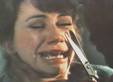
 <![endif]><![if !vml]>
 <![endif]>