

|
|
Chapter 1
The Producer
The initial buzz about the made for television adaptation of Mark Fuhrmans best selling book Murder in Greenwich left many key questions unanswered. Would Fuhrmans investigation into the 1975 murder of Martha Moxley that he wrote about in his book be a straightforward documentary? Was it going to be turned into a drama? If so, would a major studio and accomplished actors cooperate? Who would produce it? Who would play Fuhrman? Would it be any good? Murder in Greenwich first aired November 17, 2002 on the
USA Television Network under the studio sponsorship of Sony Corporation. Sony is the
parent company of Columbia, Touchstone, Tri-Star and Castle Rock. I gave it 3 stars out of
4 aesthetically for direction, acting, production values, background music and a cleverly
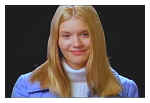
devised script that put drama ahead of accuracy with respect to the murder or the book. I took off half a star Martha did not have a cover girl face and she looked younger
than she was. Maggie Grace does have a cover girl face, and she appears to be in her early
20s. I thought immediately of Sheryl Lee and Sherilyn Fenn, women in their early 20s
playing 17-year-old girls in Twin Peaks. I was not surprised to see unmistakable
links to them in Murder in Greenwich. Making a movie is as complex as making a modern automobile. It
takes a small army of artists, technicians, technical advisors and financial wheelers and
dealers. No individual can do it all. The executive director handles the business end of the project.
The director is usually responsible for supervising actors, shaping scenes, choosing
shots, editing scripts, film and sound tracks. He generally has a say in casting along
with the producer. What he actually does depends on the producer. Producers hire some
directors because of their ability to bring every element of a story together the way an
orchestra conductor turns sheet music into a symphony. Producers hire other directors
because they lend their professional expertise to following orders. Although veteran
director Tom McLaughlin appears in the credits of Murder in Greenwich as the
director, whatever vision he had for the movie is clearly overshadowed by producer Mark
Fuhrmans. Somebody has to be the boss, to raise the money, to get a
distributor, to hire, fire and decide what gets into the picture and what doesnt.
That person is the producer. Ultimately the job of everyone involved in the project is to
give the producer and the studio what they want. The producer answers only to the demands of his studio, his
budget, his time constraints and the rules that govern language sex and violence content
for the intended audience. They can get around some censorship restrictions with
suggestive words, situations and symbolism the way Alfred Hitchcock did with Eva Mari
Saints cigarette in North by Northwest. Fuhrman did it with a cigarette and a
long neck bear bottle. Producers have been known to do some or most of the writing
under a pseudonym or the name of another writer. In a Murder, She Wrote episode One way a producer can raise money, hire the professionals and
get the distribution for the movie he wants to make is to bring aboard other producers
with the money or connections he needs. Mark Fuhrman recruited Jacobus Rose, Judith and
Rachel Verno. All but four of Jacobus Roses 31 previous movie credits
list him as the production executive or co-production executive. The Verno sisters
produced four television movies between them, the most notable of which was the story of
the black man who killed and wounded several white people on a Long Island commuter train.
Some people saw it as anti-gun propaganda. You can guess how Mark Fuhrman saw it. The full title of Fuhrmans movie A name that appears in the Murder in Greenwich credits
as the technical consultant should probably be listed as a co-writer as well. Stephen
Weeks is the man responsible for giving all of Fuhrmans books a professional polish.
When a character in the movie asks his character what he does his character says that he
corrects Fuhrmans grammar. Fuhrmans character calls him partner
and thats how he is portrayed. The toughest casting In Fuhrmans Murder in Brentwood book he attributes
his use of the n-word on the McKinny tapes to a character he assembled from aspects of
several characters to shock McKinny. Johnny Cochran called him a genocidal
racist. In Fuhrmans Murder in Greenwich movie his character alludes to
Cochrans remark when his parole officer says that the people of Greenwich are going
to see him only as a convicted felon, a perjurer who set O.J. Simpson free. Meloni as
Fuhrman says, You forgot genocidal racist. He says it as though it isnt
true and everyone who knows the real Mark Fuhrman knows it isnt true. The picture Fuhrman paints of himself in his books is a
tactless, overbearing hard ass to strangers but a warm and gentle husband, father and
friend. He is macho, down-to-earth and thick skinned. He says what he thinks and admits
his mistakes. He has a passion for justice and zero tolerance for incompetence, moral
cowardice, politics, vacillation or pretentiousness. Like Arthur Conan Doyles
Sherlock Holms and Agatha Christies Hercule Poirot, Fuhrmans Fuhrman is a
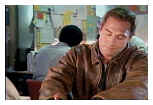
flawed hero with a brilliant mind and a heart of gold. Christopher Meloni captures these qualities so well that when
you see him as Fuhrman you dont see the actor who played a killer in OZ with
Ernie Hudson or the stupid gangster in Bound (96) with John Ryan. You dont see Meloni as a jilted
lover in Runaway Bride (99) with Julia Roberts and Richard Geer or a cop in Law
& Order with Paul Sorvino and
George Dzundza. You dont see him as a football player with O.J. Simpson in
HBOs 1st & Ten (85-90). You see him as Mark Fuhrman. Robert Forster is no stranger to
popular television series. He appeared in two episodes of Murder, She Wrote with
Angela Lansbury and one episode of Walker, Texas Ranger with Chuck Norris, Clarence
Gilyard Jr. and Noble
Willingham. I began writing The Smoking
Gun on the seemingly shaky premise that the man who murdered Ron Goldman and Nicole
Simpson got most of his ideas from the movies. I
posted it on the Internet in 1999. I posted the first draft of The Smoking Gun 2 on
the Internet in the fall of 2001. The second book dealt primarily with ideas for the
murder and the frame-up that the killer took from TV shows. My inspiration for both books came
from something peculiar I noticed when I was doing research for Iago in Brentwood
in 1997. By then I realized that every bit of evidence that pointed to O.J. as the killer
from the trace evidence on Bundy and Rockingham to the bloody shoeprints and
leather gloves also pointed to Mark Fuhrman. The story that the evidence told,
supplemented by Fuhrmans notes, his discoveries, his letter to the city attorney and
the pictures of him pointing to the Bundy glove made O.J. look too much like
Shakespeares Othello. Where there was an apparent Othello
in Brentwood it seemed to me that there would be an Iago, a racist, ambitious, master liar
intent on making a good name for himself by robbing a celebrity of his good name. For the benefit of those who havent seen or
read the play, here it is in a nutshell: Othello is a Moor in 17th
century Venice, a wealthy black man living in a wealthy white community. He is a big
celebrity who marries a beautiful white woman name Desdemona. He appoints a young officer
named Cassio as his second in command and returns from a successful military campaign
against the Turks in Cyprus to a heros welcome. Iago is Othellos trusted
advisor. He believes that Othello should have promoted him instead of Cassio so he plots
to bring both of them down. Iago is ready to take Othello does not tell Desdemona what
he suspects. To get at the truth, he uses a Mark Fuhrman interrogation technique. He lies
a little, embellishing on how precious the handkerchief is to him and asks her if she
still has it. He makes so much of its value that Desdemona is afraid to tell him that she
lost the damn thing so she lies to him and tells him that she has it but wont show
it to him because of the rude way he asked for it. Her stupid lie convinces Othello that
Iago was right. He secretly commissions Iago to kill Cassio and he kills Desdemona
himself. Not everything goes according to
Iagos plans. While he was setting up Othello to look like a rage killer, he was also
setting up a born patsy named Rodirego to do his dirty work. Rodirego is obsessed with
Desdemona and Iago talks him into killing Cassio to clear his way to her. With Iago posted
as a lookout, Rodirego ambushes Cassio but botches the job. Cassio fights back. Iago sees
that Rodirego is no match for Cassio. He steps out of the shadows to stab Cassio in the
leg from behind and ducks back behind cover. Rodirego is too incompetent to finish the
job. Cassio cries Murder! Witnesses appear. Iago leaps into action and kills
Rodirego to make sure he doesnt spill the beans. Iagos wife learns enough from
Cassio and Othello to figure out why Othello called Desdemona a whore and killed her. She
points the finger of blame where it belongs. Iago stabs his wife to death with his sword.
Othello wounds Iago with his dagger and kills himself..
Whoever killed Ron and Nicole and
framed O.J. must have known that story. If you look at it from their killers point
of view, most of the major elements are there in broad stokes. A rich black
hero in a rich white neighborhood kills his white wife in a jealous rage.
Innocent people are set up to appear guilty and the entire system of justice is bent to
serve the ambitions of one man. The trick is to learn from Rodirego and Iagos
mistakes. You make sure that you can trust your lookout. You dont have to risk a
ferocious battle. All you have to do is make it look like one. You do all of the dirty
work yourself and find another use for your Rodirego. Thats what you get
with Mark Fuhrman as Iago in Brentwood and his friend Ron Shipps
testimony about O.J.s dream. You can lay dozens of movies on top
of that scenario, taking a little of this and a little of that from each one to fit the
existing landscape and individuals involved. Thats what it looks like the killer did
on Bundy and Rockingham. You see the same pattern in Fuhrmans Murder in Brentwood.
In Stephen Kings Needful Things with Max Von Sydow, Ed Harris, Bonnie Bedelia
and Amanda Plummer, the Devil disguised as a curio shop owner uses Iagos tactics to
bring down a whole town. But thats as far as King goes with Iago. Fuhrman goes much
further. The plaque says,
MARTHA
YOUR
SMILE WILL ALWAYS BRING
HAPPINESS AND HOPE
TO YOUR FRIENDS…1975. Fuhrman’s book and movie have the footstone with the words, DAUGHTER
MARTHA ELIZABETH
MOXLEY
1960 1975. The word daughter, the name Elizabeth and
the birth year added to the death year on the stone have links to Fuhrman that the
metal and concrete plaque doesnt have. Fuhrmans tombstone choice looks
like a symbol just as pizzas were often symbolic of tombstones in other movie links to
Fuhrman. It can stand for many things that we know about Fuhrman. 1975 was not only Martha
Moxleys death year; it was the death year of Fuhrmans career in
the Marines and the birth year of his career with the LAPD. Murder in Greenwich is
packed with symbols that have multiple meanings. Martha had a cat named Tiger. When
the Detroit Tigers won the World Series in October 1968, national TV broadcast pictures of
riotous fans setting fires and turning over cars. Around the time the Tigers won the 1984
World Series, Mark Fuhrman was visiting Rockingham were O.J. beat up his car with a
baseball bat. Fuhrman made it sound as though O.J. symbolically beat his wife with the bat
as an omen of things to come. The burning Jack O Lantern in Murder in Greenwich
combined with a baseball bat smashing it has to be an allusion to Detroit and O.J.
Contact the author:
Jasper Garrison Copyright © 2004 Smartfellows Press
|




 Othello


